If you’re ready for a fresh start after you lose your home in a disaster, one of the most important decisions you’ll make is choosing the right building designer for your rebuild. Whether you want to downsize to a smaller footprint, expand for multigenerational living, or reimagine your space, the design professional you hire will become your guide from vision to reality.
The right building designer won’t just draft blueprints, they can help you avoid costly mistakes, navigate permitting, and keep your project moving forward. In many ways, your designer becomes a partner in restoring not just a house, but a home that supports your life, values, and future.
Before starting your search, it’s worth stepping back to ask yourself a few key questions:
- What does my project really require?
- What level of expertise will help me get through permitting without delays?
- Who is the best fit for my vision, site, and budget?
By reflecting on these questions, you’ll approach the process with more clarity, confidence, and direction.
The right design professional won’t just design your home, they may save you from the kinds of problems that can stall a rebuild once it’s underway.
Finding Inspiration Before You Hire
Before interviewing design professionals, it helps to have a clear sense of your goals. Some people already have a vision of their next home, while others are starting from scratch. Either way, inspiration is essential fuel for this process. Here are some ways to start gathering ideas:
- Take a neighborhood walk or drive. Notice which homes catch your eye. Are you drawn to clean modern lines, or do you love the charm of a Craftsman porch? Snap photos or jot notes about rooflines, windows, doors, and finishes that appeal to you.
- Visit open houses in your area. Touring staged homes can reveal layout ideas, smart storage solutions, and how different styles feel in person.
- Dive into design magazines. Publications like Dwell, Architectural Digest, Sunset, Southern Living, and Better Homes & Gardens offer ideas on floor plans, materials, and even budgets. Many also have online archives full of visual inspiration.
- Read books on design. Favorites include Designing Your Perfect House by William Hirsch and The Architecture of Happiness by Alain de Botton, both of which explore how design choices shape our everyday lives.
- Browse online resources. Pinterest, Houzz, and even Instagram can help you assemble a digital “idea book.” Many architects and design-build firms share portfolios online, so you can see real-world projects in your area.
The clearer you are about what you like—and how you live—the easier it will be for a designer to translate your ideas into a home you’ll love.
Identifying the Right Professional for the Job
Not every project requires the same expertise, and not every homeowner wants the same level of involvement. Here are the three most common options for residential design work:
1. Draftsperson or CAD Technician
A draftsperson, sometimes called a CAD (computer-assisted design) technician, can be an excellent choice if you:
- Have a limited budget.
- Want to recreate your original home design with minimal changes.
- Plan to use stock home plans from a catalog, magazine, or website.
These professionals are trained in technical drawing and can turn your sketches or verbal ideas into permit-ready working drawings. They’re especially helpful for straightforward rebuilds where creativity and structural problem-solving aren’t top priorities.
Pros: Affordable, efficient, and able to produce code-compliant drawings quickly.
Cons: Typically not licensed architects, so they may have less training in creative design or complex structural solutions.
That said, some draftspersons are trained but unlicensed architects, making them a solid middle-ground option.
2. Licensed Architect
Hiring an architect gives you access to the highest level of professional training in design. In the U.S., licensed architects must complete a degree from an accredited architecture program, complete a rigorous three-year internship, pass licensing exams, and maintain state certification.
Even if your state doesn’t require an architect for single-family homes, there are times when hiring one is strongly recommended. For example, if your property has zoning challenges, is on a steep hillside, or lies in a high fire or flood zone, an architect’s expertise can save you from costly mistakes and delays.
An architect is best if you:
- Want a one-of-a-kind, custom home design.
- Have a challenging site or complex building requirements.
- Want assurance that your investment results in a beautiful, functional, and safe home.
- Prefer a professional advocate to guide you through permits, contractor selection, and construction.
Pros: Comprehensive training, creative problem-solving, project management support.
Cons: Higher fees compared to draftspersons or design-build firms.
Many architects offer flexible service levels. Some will provide just the plans, while others can oversee your entire project—from initial sketches to final construction. If you hire an architect to manage your rebuild, they can also coordinate bids, select materials, and act as your advocate with contractors and inspectors.
3. Building Designer with a Design-Build Firm
Design-build firms offer a bundled approach: one team handles both design and construction under a single contract. Their in-house building designers typically gain experience working alongside architects, engineers, and contractors, and many pursue certification through the National Council of Building Designer Certification (NCBDC).
A design-build firm might be right if you:
- Want a single point of contact from start to finish.
- Prefer a streamlined process with fewer hand-offs.
- Live in a planned community where only minor modifications to existing plans are needed.
- Have a fixed or limited budget.
Pros: Simplified communication, predictable timelines, and often lower costs since the design and build teams work together from the start.
Cons: Some firms emphasize construction over design, so design creativity may be limited. After a disaster, some companies offer only stock floor plans to expedite rebuilding—an economical but less personalized approach.
When evaluating design-build firms, review their past projects to make sure you like both their design style and construction quality.
When There’s More Than One Decision-Maker
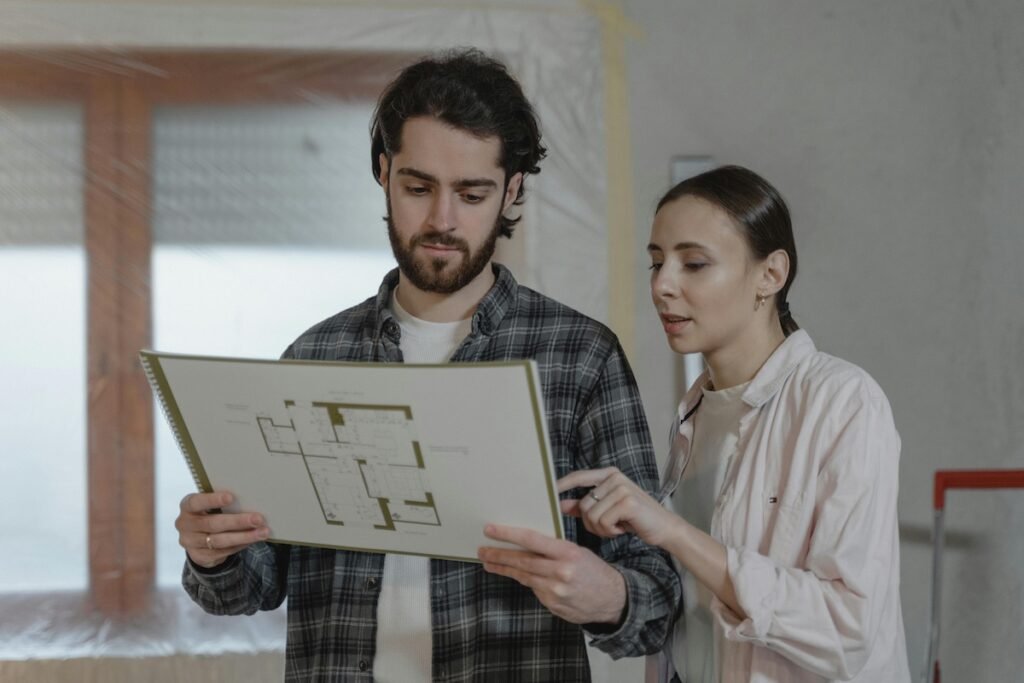
Designing a home is rarely a solo decision. If you’re making design decisions with a partner, spouse, family member, or co-owner, it’s natural for each of you to have your own vision for the new house. One person might prioritize energy efficiency and clean lines, while another dreams of a cozy Craftsman with a big porch. Add in stress, deadlines, and budget pressure, and it’s easy for conversations to stall or turn tense.
Before you interview designers, take some time to align your goals. Consider these questions together:
- How do we want to live in this home?
- What architectural styles appeal to us?
- How many bedrooms, bathrooms, and offices do we need?
- Do we need to plan for children, guests, or accessibility in the future?
- What are our must-haves, and where can we compromise?
- How will we make major design and budget decisions if we disagree?
Many families find it helpful to create a shared vision board. Each person can start by collecting their favorite photos, sketches, or magazine clippings. By comparing inspiration, you’ll quickly see where your tastes overlap—and where they diverge. A skilled designer can help bridge these gaps, but the clearer you are as a team, the smoother the process will be.
Tips for Success When Hiring a Designer
- Do your homework. Research local professionals, read reviews, and ask for recommendations from neighbors who are also rebuilding.
- Check credentials. Make sure your designer, architect, or firm has the licenses or certifications required in your state.
- Ask about process. Will they just provide drawings, or will they guide you through permitting and construction as well?
- Clarify fees upfront. Some charge hourly, others a flat rate, and some base fees on project cost. Know what you’re agreeing to.
- Trust your gut. You’ll be working closely with this person or team for months. Choose someone you feel comfortable with and who listens to your needs.
Take your time with this step of the rebuild process. Gather inspiration, align with your family, and carefully evaluate potential designers. The effort you put into choosing the right design partner now will pay off in the form of a smoother rebuild, fewer delays, and a home you’ll be proud to live in for years to come.