
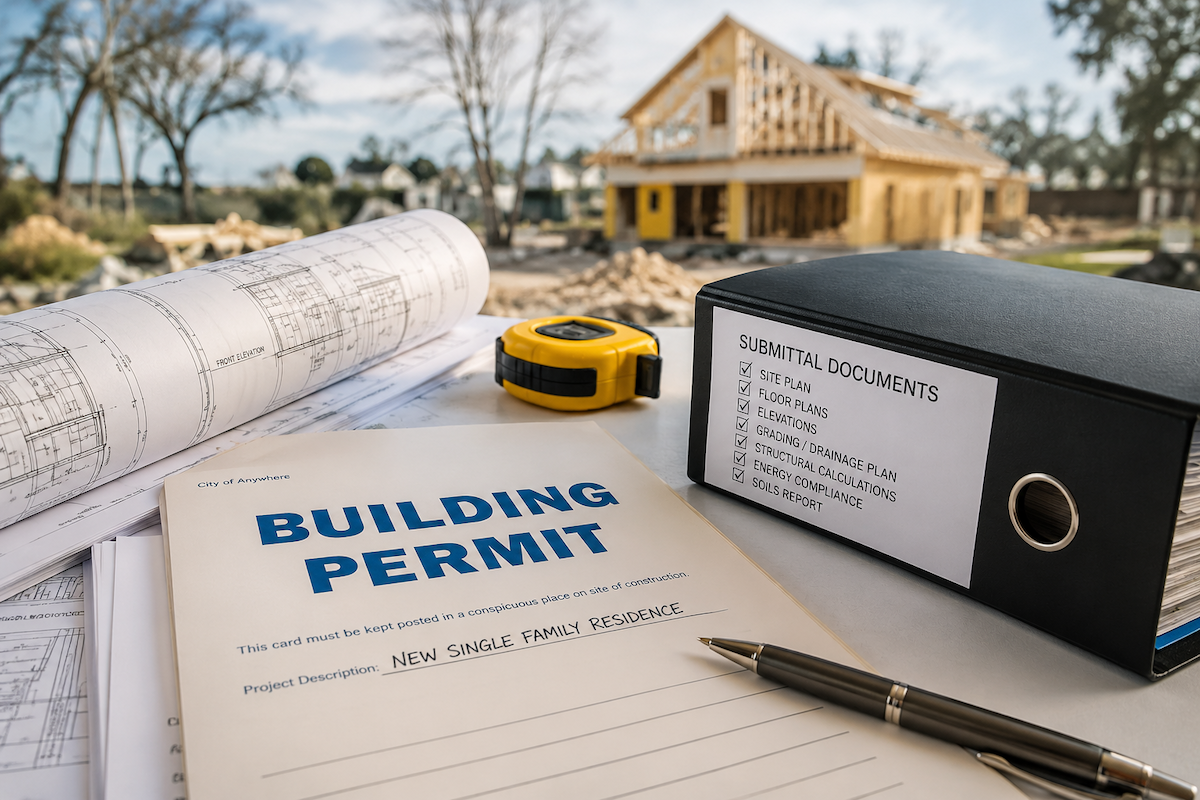
Getting a permit to build a new house is rarely fast or easy, even under normal circumstances. If you’re applying for a building permit after a wildfire, hurricane, or flood, your building department may be overwhelmed, and you should expect the process to take longer and be more complex than usual.
When hundreds—or even thousands—of homeowners are rebuilding at the same time, there may be little opportunity to fast-track your building permit. Still, you can avoid many of the most common delays by staying organized, submitting complete plans and reports upfront, and understanding the process before you apply.
Even if your architect or contractor handles the application for you, it helps to understand how the permitting process works, what documents are required, and where delays commonly happen. For organized homeowners, the process is often more detail-heavy than truly difficult. Problems usually arise when there are missing documents, zoning conflicts, grading issues, septic concerns, wildfire regulations, coastal restrictions, or incomplete plans.
The homeowners who have the smoothest experience are the ones who:
- Hire professionals familiar with the local jurisdiction
- Communicate early with the building department
- Submit organized, complete plans
- Respond quickly to correction notices
- Stay flexible during revisions
In well-run jurisdictions with experienced staff, getting a standard new home permit can feel fairly routine. But in highly regulated areas—or after a disaster—the building permit process will still require considerable patience and persistence.
What Is a Building Permit?
A building permit is the official approval from your city or county allowing construction to begin on your home. It confirms that your plans meet local building codes, zoning rules, and basic safety standards before work starts.
A permit typically covers the major systems that make a home safe and functional, including:
- Foundation and structural framing
- Roofing and waterproofing
- Electrical wiring and lighting
- Plumbing and sewer connections
- Heating and cooling systems
- Insulation and energy-efficiency requirements
What many homeowners don’t realize is that permit approval is not only about the design of the house, but the safety of the property it sits on. Much of the review process focuses on drainage, grading, setbacks, fire access, utilities, structural engineering, and environmental requirements. Make sure you have a completed property assessment (if required) and the necessary site reports before you apply for a permit.
The permit process also includes inspections during construction to help ensure the work is completed according to the approved plans. While a permit doesn’t guarantee flawless construction, it does provide an important layer of oversight intended to protect both homeowners and future occupants.
Who Should Submit the Building Permit Application?
The permit can usually be submitted by you, your architect, or your contractor, but in many areas with complex terrain or seismic risk, certain documents may need to be prepared and signed by licensed professionals. The best choice depends on your budget, timeline, and experience level.
Architect or Building Designer
Best for: Complex rebuilds or difficult sites
Pros
- Knows the plans inside and out
- Can respond to technical questions quickly
- May already have relationships with local permitting staff
- Often catches issues before submission
Cons
- Permit handling may cost extra
- Some designers step away after permit approval
Contractor
Best for: Homeowners ready to build immediately
Pros
- Familiar with local codes and permit procedures
- Can identify practical construction issues early
- Helps align permits with construction scheduling
Cons
- May submit plans before design details are fully resolved
- Not always familiar with the original design intent
Homeowner
Best for: Hands-on owners comfortable with paperwork
Pros
- Maintains full control of the process
- Can save money on professional fees
Cons
- Time-consuming and sometimes confusing
- Corrections and delays are more common
- Technical questions can be difficult to answer
For many homeowners, the smoothest approach is having the designer handle the initial submission and the contractor manage follow-up once construction begins.
What To Do Before Submitting the Application
Contact your local building department early to confirm:
- Required documents
- Current permit timelines
- Plan check fees
- Available pre-submittal meetings or appointments
Permit requirements vary widely by city and county, especially after natural disasters when departments are overwhelmed.
Do You Need a Grading Permit and Bond?
If your project involves major grading, excavation, cutting, or filling, you may need a grading permit and grading bond before the building permit can be issued.
A grading bond guarantees the work will be completed safely and according to approved plans. Bond costs are typically based on the total grading project cost.
Example: If grading costs $50,000 and the contractor’s bond premium rate is 2%, the bond cost would be about $1,000.
Ask your contractor whether grading bond costs are included in their proposal.
How Are Building Permit Fees Calculated?
Permit fees vary by location and project type. Fees may be based on:
- Total construction value
- Square footage
- New construction versus remodel classification
Some jurisdictions bundle fees together, while others separate them into categories such as:
- Building
- Electrical
- Plumbing
- Mechanical
- Plan review
- Inspections
- Local impact fees
After a disaster, some cities and counties offer reduced, waived, or deferred fees for rebuilding projects. Always ask what relief programs may be available.
Important: Include permit and related fees in your insurance rebuilding claim whenever possible.
How Long Does Approval Take?
Permit approval can take anywhere from a few weeks to several months—or more—depending on:
- Local staffing levels
- Disaster recovery demand
- Project complexity
- Completeness of your application
You can help reduce delays by submitting clear, code-compliant plans with all required reports included.
Some jurisdictions also offer:
- Expedited review programs
- Faster processing for resilient or fire-safe rebuilding
- Third-party plan check services for an added fee
Key Takeaway
The permit process may be the most frustrating part of your entire remodeling journey. Just remember, if you can submit a complete application on day one, with all the required paperwork and reports, you have the best chance of creating the smoothest and fastest process possible.